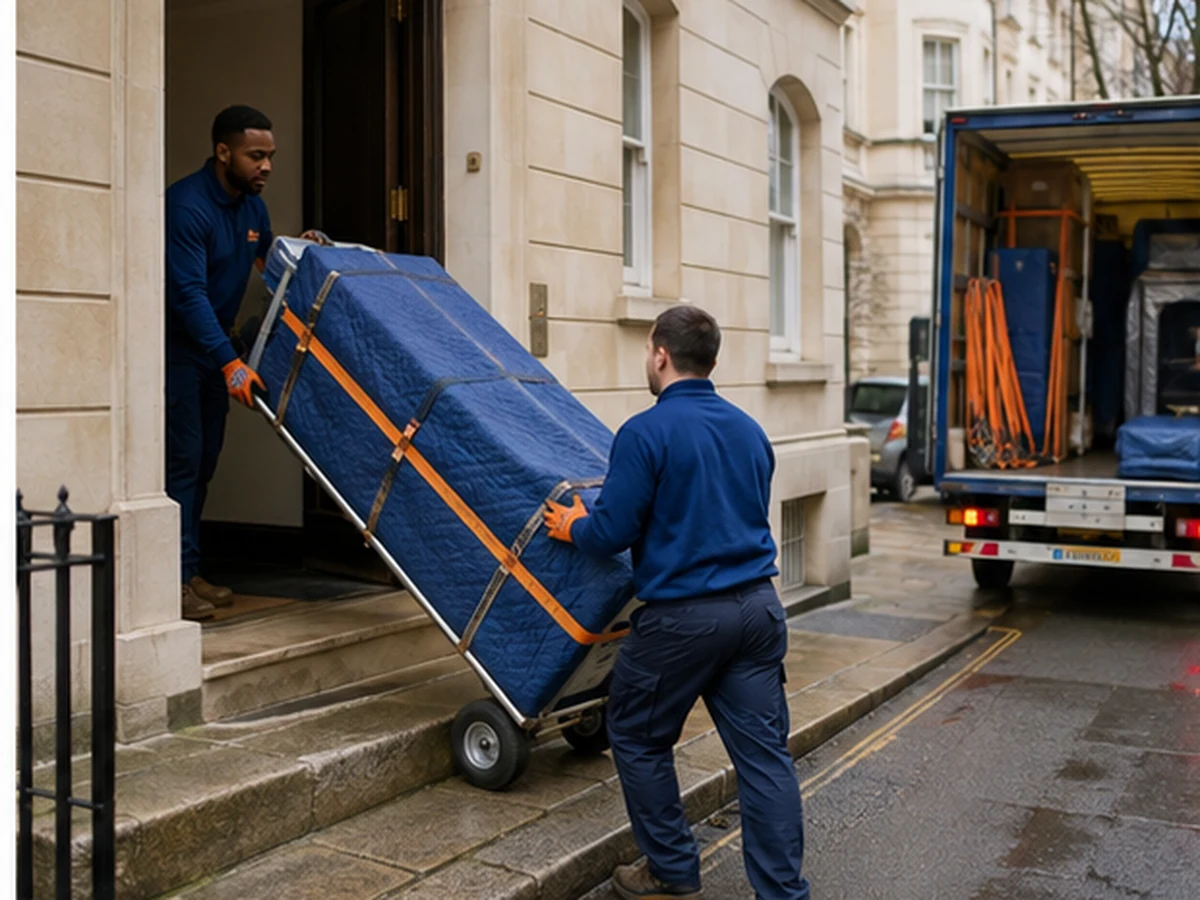
Book flat removals in London around floors, lift reservations, concierge rules, parking, inventory and delivery access.
Flat Removals London Booking Brief for a Comparable Removal Quote
Flat Removals London succeed when both buildings give the crew a workable access slot and route. The commercial decision starts with one written brief that identifies the collection and delivery postcodes, property type, preferred date, access window and the person authorised to approve changes. A bedroom count is useful context but it is not a load record. The brief should state flat contents, cupboards, balcony or storage cage, boxes and shared-item ownership, alongside the services that the customer expects the crew to perform.
A provider can then separate what is included, assumed, optional and excluded. That distinction matters when comparing a removal company, a man-and-van team or a specialist subcontractor. The booking should identify the contracting business, contact route, payment stages and cancellation or rescheduling terms before any deposit. Verbal assurances should be reflected in the written scope.
The strongest purchase route is not the shortest form. It is the shortest route to a quote that can survive move day. Keyline Move London therefore asks for enough detail to align the load, access, vehicle, crew, protection and delivery record before booking.
- Both postcodes and full addresses
- Move date and acceptable access window
- Named customer and change authority
- Included work, options, assumptions and exclusions
Flat Removals London Inventory Record and Load Version
The inventory is the commercial control for capacity and labour. It should include flat contents, cupboards, balcony or storage cage, boxes and shared-item ownership. Contents inside cupboards, lofts, garages, balconies, storage cages and sheds are easily missed. Box numbers should distinguish small book boxes from large light-content cartons, because identical counts can create very different volume and handling requirements.
Large items need approximate dimensions, dismantling status and any fragile, heavy or high-value handling note. Photographs can support the record where the customer is comfortable providing them, but images should not replace a list. Each update should create a new dated version so the provider can recalculate vehicle, crew, materials and booked time without losing the earlier basis.
A final inventory checkpoint before the move reduces disputes about additional loads. Items rejected for safe-capacity, legal, contamination or specialist reasons must be recorded. Customer-carried possessions and essentials should also be marked so they are not loaded accidentally.
- Room-by-room furniture and appliance list
- Box groups, bags and loose contents
- Dimensions and handling flags
- Dated version accepted before dispatch
Flat Removals London Access Route and Building Slot
London access is a two-address operation. The plan records floor, lift dimensions and slot, stairs, concierge, doors, bay and carry distance. It should name the person responsible for concierge approval, lift reservation, keys, loading-bay access or a parking suspension where one is required. The provider should not promise an unlawful stopping position or treat a penalty as an ordinary service charge.
Carry distance changes the labour plan even when the load is unchanged. Narrow stairs, turns, low ceilings, basement steps, communal doors and limited lift dimensions can alter item handling or require dismantling. A measured route is especially important for wardrobes, sofas, desks, white goods and bulky marketplace purchases.
Building time windows belong in the booking record, not in a casual note. If the origin and destination windows do not overlap realistically, the quote needs a holding, waiting or staged-delivery assumption. The customer should know who pays building fees and who obtains permissions.
- Floors, stairs and working lift dimensions
- Lawful vehicle position and carry distance
- Concierge, keys and loading-bay owner
- Fallback if the agreed slot changes
Flat Removals London Vehicle, Crew and Loading Sequence
Vehicle choice should follow the inventory and access evidence. For this route the relevant basis is vehicle compatible with lawful access, load and booked building window. Marketing labels such as small, medium or large van are not sufficient by themselves; the provider should confirm the actual vehicle type and any operational limits relevant to the load. Published payload or volume claims require confirmation for the dispatched vehicle.
Crew size is linked to item weights, stairs, distance, dismantling and the booked window. A lower helper count may extend labour or make some items unsafe to move. The plan should define customer participation carefully rather than assuming it. Nobody should be pressured into lifting beyond their ability or into a method the provider has not assessed.
The load sequence protects access to essentials and reduces unnecessary handling. Destination rooms, stop order and items needed first should be visible on labels. Multiple vehicles or trips must state whether the quote includes both and how custody is recorded between them.
- Dispatched vehicle confirmed against load
- Crew roles linked to route and handling
- Load order matched to delivery order
- Extra trip authority recorded before departure
Flat Removals London Packing, Protection and Dismantling Scope
Protection is purchased as a defined service, not inferred from photographs. The scope should state common-area protection, packing, covers and dismantling for narrow routes. Customer-packed boxes need a completion deadline, labelling convention and any weight or prohibited-content rules. Crew packing needs material quantities, rooms covered and the condition in which cupboards should be left.
Furniture dismantling should identify each approved item, the fixing method, hardware bag and reassembly destination. It must not silently include technical disconnection, structural work or modifications to rented property. Flat-pack furniture that cannot be safely rebuilt should be flagged before booking rather than discovered at delivery.
Condition exceptions at collection help both sides. Existing scratches, unstable furniture, overfilled cartons or unprotected fragile items should be recorded without turning the process into a fabricated guarantee. The provider should explain the evidence and reporting route for damage rather than promise that no incident can occur.
- Packing owner and completion deadline
- Materials and fragile-item method
- Dismantling and reassembly item list
- Pre-existing condition exceptions
Flat Removals London London Road Charges, Parking and Waiting Basis
The quote should explain how route-dependent costs are handled. The booking needs the actual vehicle checked against current road-user requirements, the planned zone and travel window, and the current official rules on the service date. Generic statements that every van is exempt or every journey is charged are unreliable because the result depends on vehicle and route.
Parking must be lawful at both addresses. The customer and provider should agree who investigates restrictions, books any suspension or dispensation and pays the published fee. Loading space is different from permission to remain indefinitely. If the vehicle must move, the quote should state how extra carrying distance or repeated repositioning affects labour.
Waiting terms require a start event, included allowance if any, charging unit and authority. Common triggers include unavailable keys, delayed completion, an occupied lift, unfinished packing and access blocked by another vehicle. A time record is stronger than an unexplained supplement.
- Current official vehicle and zone checks
- Parking permission owner and receipt
- Route, stops and travel basis
- Waiting trigger, record and approval
Flat Removals London Price, Deposit and Change Control
A comparable price shows labour, vehicle, materials, packing, dismantling, route costs, parking, VAT position and optional work separately where practical. The customer should know whether the basis is fixed for the recorded scope, hourly, minimum-booking, hybrid or subject to survey. An attractive headline price has little meaning when the included helper count, time and access assumptions are hidden.
The deposit amount, due date, balance trigger, accepted payment route and refund rules should be written before payment. Bank details or payment links should be verified through the company contact route. Cash-only pressure or a late change in contracting identity deserves clarification.
Move-day variations need a named authority. Added items, a changed destination, an extra stop, inaccessible lift or customer-requested packing should be priced or time-recorded before the crew proceeds where safe and practical. The final invoice should reconcile the approved change with the original scope.
- Quote basis and VAT position
- Deposit and cancellation terms
- Named change authority
- Invoice matched to approved variations
Flat Removals London Loading Control and Chain of Custody
Loading begins against the final inventory and labels. The lead mover should confirm excluded essentials, keys, documents, medication, valuables and customer-carried items before closing the vehicle. Counts can be made by room or labelled group rather than pretending that every individual object is sealed.
For multiple stops, office assets or storage collections, the record should show what entered and left the vehicle at each point. Doors, straps, blankets and weather exposure are operational matters that should be managed without publishing unsupported claims about equipment or security. Any unexpected access or condition issue is logged while evidence is available.
The customer should receive a contact route during transit and a realistic update method. The service must not claim live tracking unless the dispatched operation genuinely provides it. Custody transfers to a third party, storage provider or specialist must be expressly authorised.
- Final count before vehicle closure
- Stop-by-stop additions and removals
- Contact route during transit
- Third-party transfer authority
Flat Removals London Delivery, Placement and Signed Handover
The destination result for this booking is group count, destination flat placement and concierge or receiver notes. The delivery sequence should follow room labels while keeping exits and communal areas usable. Reassembly and placement are limited to the recorded item list; repeated redesign of a room or fixing items to a building should not be assumed.
The receiver checks group counts, visible condition exceptions, retained fixings and unperformed work before signature. A signature should not erase rights or evidence; it records the observed handover status. The provider should disclose its complaint and claim route, required evidence and relevant time limits in the actual contract rather than inventing universal terms on a marketing page.
Insurance statements must be supported by current documents identifying the insured business, policy type, limit, exclusions and status. The customer should compare those documents with the load and any declared high-value item. This page does not claim insurance until the provider has supplied verifiable evidence.
- Destination-room placement record
- Count and visible condition exceptions
- Fixings and unperformed work returned
- Complaint and evidence route supplied
Flat Removals London Commercial Comparison Checklist
The best buying decision for renters, owners, landlords and managing agents compares providers on the same inventory and both access routes. Each quote should name the business, vehicle and crew basis, packing owner, protection, road and parking treatment, waiting rules, handover and exclusions. Reviews can support a decision but they do not replace current documents or a scope that matches the property.
A site survey or video survey is valuable when the load is dense, access is uncertain or specialist items are present. The survey outcome should update the written quote. A provider that asks precise questions is not necessarily adding friction; it is exposing the variables that otherwise emerge after arrival.
The booking boundary for this route is end-of-tenancy cleaning, building fees, waste and storage are separate unless listed. Specialist piano work, storage, waste carriage, end-of-tenancy cleaning, technical disconnection and building works remain separate unless expressly contracted and evidenced. Use the Keyline Move London request form to build a reviewable brief, then confirm provider identity and all claims before payment.
- Same inventory sent to each provider
- Both access routes compared
- Current documents checked before deposit
- Specialist and excluded work separately authorised
COMMERCIAL NEXT ROUTES
Flat Removals London Service, Area and Quote Links
BOOKING NOTES
Flat Removals London Commercial Controls
01Flat Removals London quote inclusion
The quote should state inventory version, addresses, access, vehicle and crew basis, booked time or fixed scope, packing, protection, dismantling, parking, road charges, waiting, VAT position and exclusions.
02Flat Removals London inventory changes
Added or removed items should update the dated inventory and any affected capacity, labour, materials and price before dispatch where practical.
03Flat Removals London parking responsibility
The booking should name who checks local restrictions, obtains permission and pays published fees. A provider should not promise unlawful parking.
04Flat Removals London insurance evidence
Check a current document for the contracting business, policy type, limits, exclusions and status. Do not rely on an unsupported logo or generic sentence.
05Flat Removals London specialist items
Pianos, safes, technical disconnection, hazardous contents and other specialist tasks need separate assessment and may require another qualified provider.
06Flat Removals London handover record
Record counts by labelled group, placement, visible exceptions, returned fixings, unperformed work and the receiver at the destination.
Current Official References for London Moving Decisions
Check the actual vehicle, route, date, borough and contracting provider because official conditions and commercial facts can change.